
Civil Engineers: Roles & Responsibilities Explained
Discover what a civil engineer does daily. Explore civil engineering duties, project management, and job responsibilities that keep our world functioning seamlessly.
QUANTITY SURVEYING
G.S.D Editior
3/12/20263 min read
What Does a Civil Engineer Actually Do
From the moment you turn on your faucet to the instant your tires hit the pavement, you rely on the unseen work of civil engineers. While construction crews pour the concrete, these professionals act as the designers who plan the complex systems that keep society running.
We rarely notice this work because success here is measured by silence - pipes that don’t burst and bridges that don’t fall. The role of civil engineers in public safety ensures the world beneath your feet remains stable.
Why Your Commute Depends on 'Layer Cakes' and Swaying Bridges
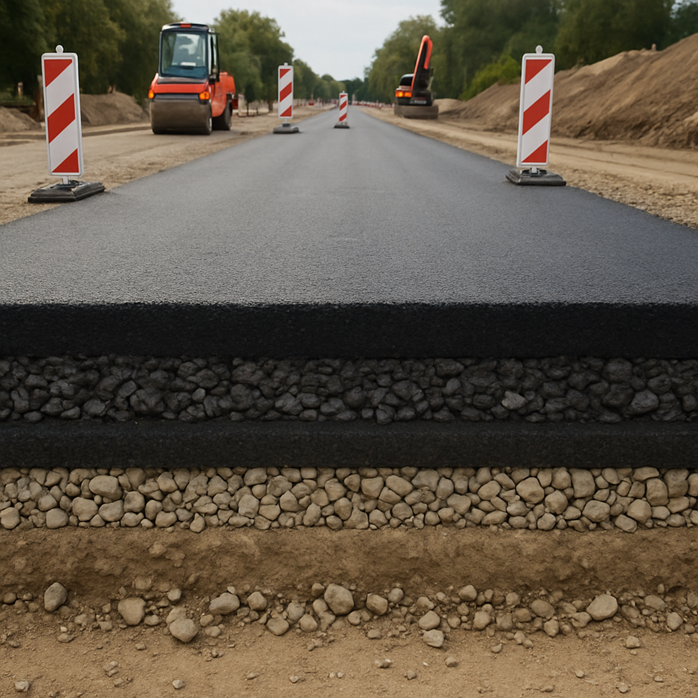
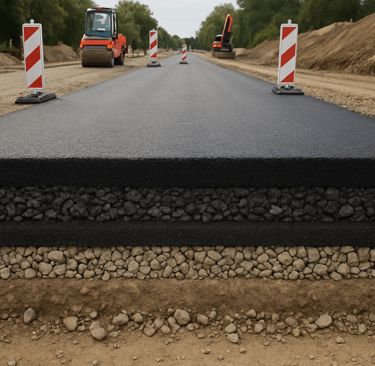
While you might see a road as a simple ribbon of blacktop, it is actually a carefully engineered "layer cake" designed to handle the weight of thousands of cars. This reliability starts with Geotechnical engineering—the study of how dirt and rock support heavy structures. Before paving begins, engineers must ensure the ground won't shift, sink, or slide. To keep your ride smooth and safe, a modern road relies on three essential layers:
Compacted Soil: The dense base that holds everything up.
Crushed Stone: The drainage layer that prevents water from pooling.
Asphalt or Concrete: The durable "wear surface" you actually drive on.
Just laying these materials down isn't enough. If the soil beneath the pavement isn't properly squeezed—or "compacted"—air pockets remain. Over time, heavy trucks vibrate the ground, causing the earth to settle and leaving the asphalt unsupported, which creates potholes. Engineers design these hidden layers to drain water away while remaining stiff enough to support a fully loaded semi-truck.
Looking upward, the rules change slightly. While we want roads to remain solid, we actually need bridges to behave like trees in the wind. Although counter-intuitive, a bridge designed to be perfectly rigid would likely snap under stress. Engineers design these massive structures to sway and flex, allowing them to absorb energy without breaking. This balance of strength and flexibility is crucial, much like how engineers prevent the "Bathtub" effect to manage your city's water.
Preventing the 'Bathtub' Effect: How Engineers Manage Your City's Water
Imagine your city as a giant bathtub. When a storm hits, the clouds turn the faucet on full blast. Without careful urban infrastructure design and planning, the tub fills up immediately, flooding streets and basements. Civil engineers apply the principles of hydrology—the science of water movement—to ensure the "drain" can handle the flow. This involves designing distinct systems to separate stormwater from sanitary sewers, ensuring that a heavy afternoon downpour doesn't overwhelm the treatment plants responsible for cleaning household waste.
Concrete pipes aren't the only tool for effective water resource management anymore. Modern projects often employ sustainable infrastructure development practices to soak up rain before it ever reaches the street. By designing "sponge city" features, engineers create spaces that look like ordinary roadside gardens but actively capture and filter runoff.
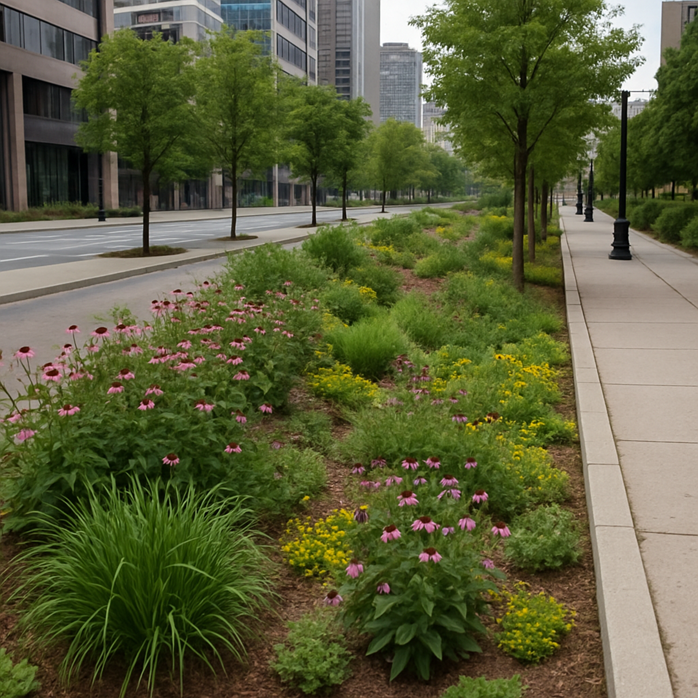
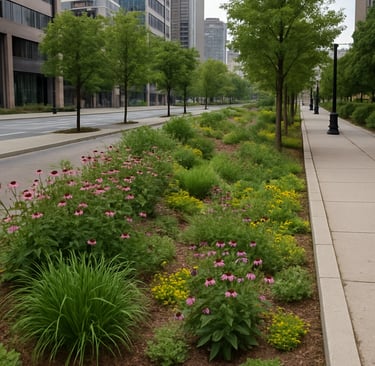
This approach reduces the burden on underground systems and filters out pollutants naturally, proving that heavy-duty flood control can also be aesthetically pleasing.
Delivering water to your tap requires a different kind of precision. If the pressure is too low, your shower trickles; too high, and pipes burst. Engineers rely on sophisticated civil engineering software and technology to simulate these complex networks, ensuring consistent flow across miles of hidden infrastructure. Because a single calculation error in these systems could endanger public health, the engineers behind them are held to rigorous professional standards.
Protecting Public Safety: Why the Engineer's License Matters More Than the Hard Hat
Civil engineers do more than build; they protect. While architects focus on a structure's style, engineers ensure its life through rigorous professional engineer license requirements. This work goes beyond math, utilizing essential soft skills for project engineers to future-proof cities against climate change. Next time you turn on a faucet, recognize the invisible planning designed to keep your community safe for decades.